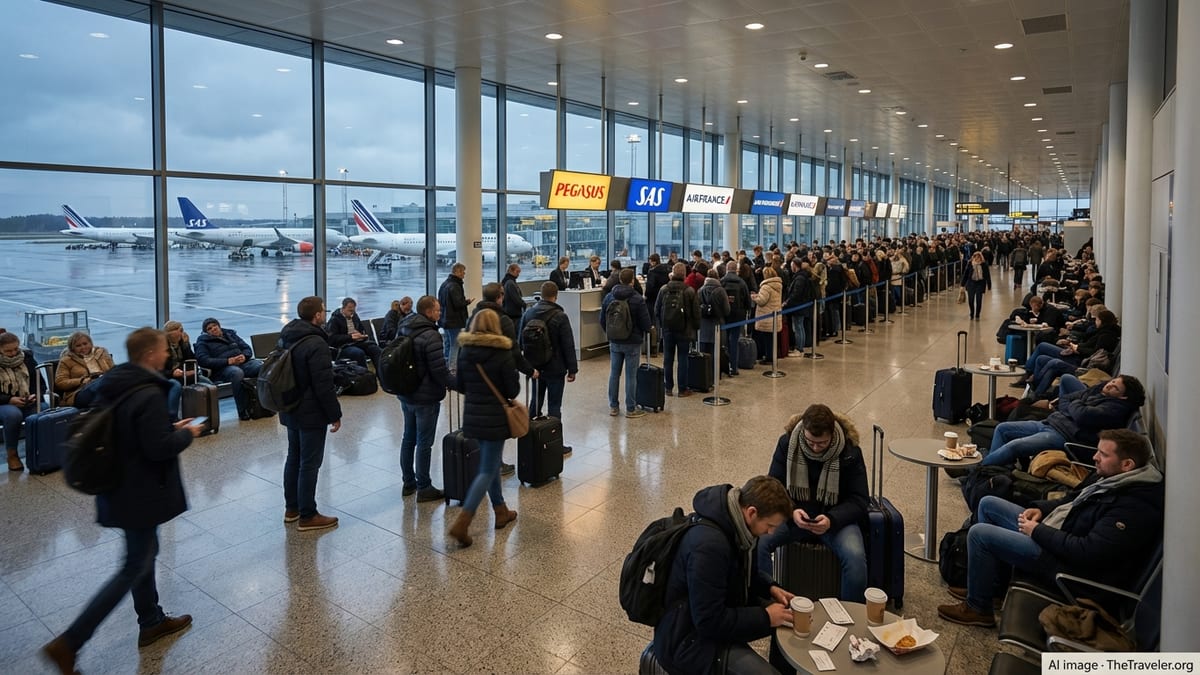
Europe's Winter Wonderland Turns White-Knuckle Travel Nightmare
Europe's skies recently plunged into a state of severe disarray, demonstrating the fragile balance of modern air travel against the forces of nature and industrial action. What began as a picturesque winter scene quickly escalated into a logistical nightmare, with over 500 flights cancelled across Europe and thousands of passengers left stranded. This widespread disruption, impacting major hubs from Paris to Amsterdam, London to Frankfurt, highlighted the interconnectedness of the continent's aviation network and raised pressing questions about airline resilience and passenger preparedness.
The chaos on January 4, 2026, saw an astounding 534 cancellations and more than 1,022 delays across vital gateways in the UK, Germany, the Netherlands, France, Spain, and the Nordic region. This wasn't merely a localized hiccup; it was a continental crisis, crippling schedules at airports serving global cities like London, Munich, Geneva, Dublin, Amsterdam, Paris, and Madrid. The dual threats of severe snowstorms and crucial airline strikes conspired to create a perfect storm, leaving a trail of frustration and financial strain in their wake.
When Snow Blanketed the Runways: A Deep Dive into Weather-Induced Chaos
The initial wave of disruption emanated from France, where a fierce snowstorm swept across the nation, particularly affecting the critical Ile-de-France region. Paris's major international airports, Charles de Gaulle (CDG) and Orly, became epicentres of the early cancellations. The Civil Aviation Authority in France, facing the prospect of frozen runways and potential congestion, issued directives for airlines to significantly reduce their schedules. CDG saw a roughly 30 percent cut during peak hours, while Orly experienced a 20 percent reduction. These measures were vital not only to prevent accidents but also to allow for time-consuming de-icing procedures for each aircraft before takeoff.
The impact was immediate and far-reaching. Initial flights cancelled Europe included key domestic routes connecting Paris with Toulouse, Nice, and Lyon, as well as crucial international links to Amsterdam. This created a significant bottleneck, affecting both leisure travelers and business professionals during the busy winter season. The "orange alert" – the second most severe warning – for up to five centimeters of snow around the capital underscored the severity of the meteorological challenge.
As the snowstorm moved eastward, the Netherlands soon felt the brunt of the weather. Schiphol Airport in Amsterdam reported that nearly half of its scheduled flights were either delayed or canceled. KLM, a major partner of Air France and a dominant carrier at Schiphol, bore a significant portion of this impact, complicating connecting flights for thousands of passengers attempting to traverse Europe. This ripple effect underscored how quickly weather in one region can paralyse air travel across multiple borders.
Britain's major hubs were not spared. London Heathrow and Gatwick airports recorded substantial delays and cancellations, often due to aircraft and crews unable to arrive from snow-affected European destinations. This cascading effect disrupted planned flight chains, leaving passengers bound for southern European hotspots like Barcelona and Rome facing long waits and missed onward connections as airlines scrambled to re-organize their assets. For a deeper understanding of these widespread disruptions, read our article: Snow, Strikes & Stranded: Unpacking Europe's Widespread Flight Disruptions.
Even Germany's robust aviation system, already grappling with increased post-pandemic demand and persistent personnel shortages, experienced significant delays and cancellations at major airports like Frankfurt and Munich. These disruptions further complicated itineraries for passengers passing through central Europe, a critical transit point for much of the continent's air traffic.
The Compounding Crisis: Strikes Add Fuel to the Fire
Just as the continent began to contend with the aftermath of the snowstorms, a new and equally disruptive force emerged: industrial action. The Lufthansa strike delivered a fresh blow to Europe's already strained aviation network, leading to the cancellation of hundreds more flights and affecting tens of thousands of additional passengers. This strike created another, arguably more predictable, domino effect throughout the European air network, which operates as a highly interconnected and dense system.
Industry sources consistently highlight Germany’s central position in the European aviation infrastructure. This geographical and operational centrality means that any significant disruption within its territory, whether due to weather or strikes, rapidly affects neighboring countries and onward flights cancelled Europe-wide. The Lufthansa strike, therefore, wasn't just a German problem; it was a European challenge, exacerbating the existing backlog and further testing the resilience of airlines and airports.
The combination of weather-related closures and industrial walkouts creates a perfect storm of unpredictability for travelers. While airlines can often re-route or delay flights due to weather, strikes introduce an entirely different layer of complexity, often making swift resolution impossible due to ongoing labor disputes.
Beyond the Tarmac: Understanding the Ripple Effect and Passenger Rights
The implications of such widespread flight chaos extend far beyond mere inconvenience. Economically, business travel is hampered, impacting crucial deals and conferences. Tourism suffers as holidays are cut short or canceled. The knock-on effect on supply chains, though perhaps less immediately visible, can also be significant, particularly for time-sensitive cargo.
For passengers, the emotional and financial toll is immense. Thousands faced unexpected accommodation costs, rebooking fees, missed connections, and lost holiday days. The stress of being stranded, often with limited information, can be overwhelming. This is where understanding passenger rights becomes paramount. Under EU Regulation 261/2004, passengers whose flights cancelled Europe are entitled to specific rights, including:
- Right to information: Airlines must provide information about your rights.
- Right to care: This includes meals, refreshments, and accommodation if an overnight stay is required, as well as transport between the airport and the accommodation.
- Right to reimbursement or re-routing: Passengers can choose between a full refund or alternative transport to their final destination at the earliest opportunity.
- Right to compensation: For cancellations within 14 days of departure, passengers may be entitled to financial compensation ranging from €250 to €600, depending on the flight distance, unless the cancellation was due to "extraordinary circumstances" (e.g., severe weather). However, airline strikes are often not considered extraordinary circumstances, making compensation claims more likely.
It's crucial for travelers to be aware of these protections. While severe weather is typically categorized as an "extraordinary circumstance" exempting airlines from compensation, strikes often are not. This distinction is vital for passengers seeking redress. To learn more about your entitlements during such disruptions, consult our detailed guide: Flight Cancellations Europe: Your Rights & Impact Amidst Major Delays.
Navigating the Disruption: Tips for Travelers in an Uncertain Sky
In an era where such widespread disruptions can occur with little warning, being a prepared traveler is more important than ever. Here are some actionable tips to help navigate future flight chaos:
- Stay Informed: Before and during your journey, constantly monitor weather forecasts and airline communications (websites, apps, social media). Sign up for flight alerts.
- Travel Insurance is Key: Invest in comprehensive travel insurance that covers delays, cancellations, lost luggage, and unexpected accommodation. Understand its terms and conditions before you fly.
- Pack Smart: Always carry essential items, medications, and a change of clothes in your carry-on luggage. This can be a lifesaver if your checked bags are delayed or lost.
- Know Your Rights: Familiarize yourself with EU261/2004 (or relevant regulations in your departure/arrival country) regarding compensation and assistance. Keep a digital copy accessible.
- Consider Flexible Bookings: If possible, choose flexible tickets that allow changes without exorbitant fees, especially when traveling during peak seasons or known periods of potential disruption.
- Document Everything: Keep records of all expenses incurred due to the disruption (receipts for food, accommodation, transport). Photograph your boarding passes and any communication from the airline.
- Explore Alternatives: In case of a significant cancellation, research alternative transportation options like trains or buses, especially for shorter distances within Europe.
- Stay Calm and Patient: Airport staff are often overwhelmed during these times. A calm and polite approach can sometimes yield better results.
Conclusion
The recent wave of flights cancelled Europe due to winter storms and industrial action serves as a stark reminder of the inherent vulnerabilities within the continent's air travel infrastructure. While individual incidents like heavy snowfall or a single strike might be manageable, their combination creates a cascading crisis that can quickly overwhelm even the most sophisticated systems. As we move forward, the aviation industry, policymakers, and passengers alike must recognize the increasing likelihood of such events. Airlines and airports must continue to invest in robust contingency plans, better communication strategies, and sufficient staffing. For travelers, preparedness, awareness of rights, and a degree of flexibility are no longer luxuries but essential tools for navigating the often turbulent skies of European winter travel.