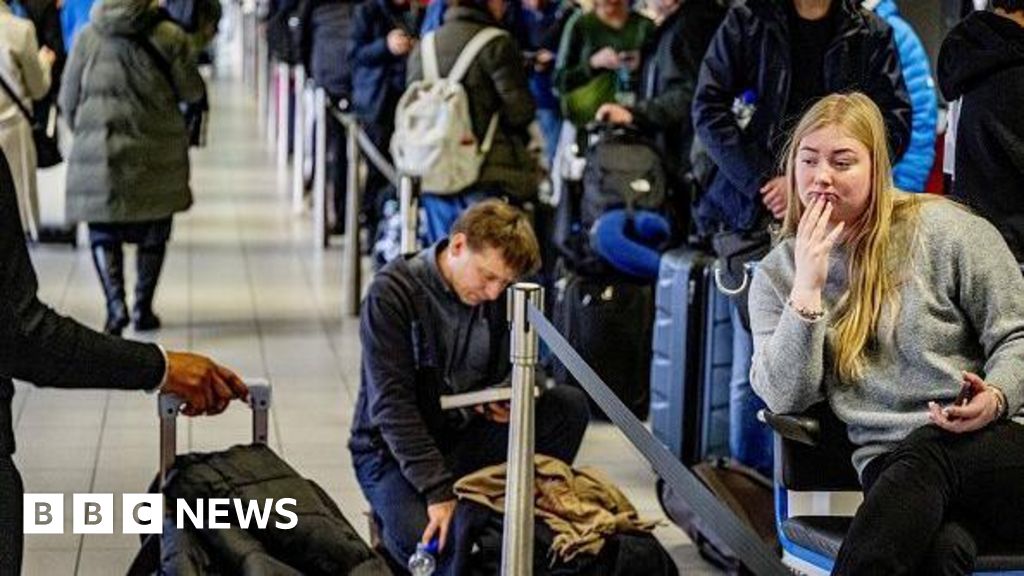
The skies over Europe recently turned into a scene of widespread chaos, leaving thousands of travelers stranded and frustrating countless travel plans. A powerful combination of severe winter weather and significant industrial action converged to create a perfect storm, leading to an unprecedented wave of flights cancelled Europe-wide. From bustling hubs like Paris Charles de Gaulle and Amsterdam Schiphol to London Heathrow and Frankfurt, the interconnected nature of European air travel meant that localized disruptions quickly escalated into continent-spanning gridlock, affecting both holidaymakers and business travelers during a crucial winter period.
The Perfect Storm: Snow, Ice, and Operational Hurdles
The initial wave of disruption largely stemmed from a fierce snowstorm that swept across Western Europe, particularly impacting France. On Sunday, a significant weather system brought heavy snowfall to the Ile-de-France region, triggering an 'orange alert' – the second most severe warning – with predictions of up to five centimeters of snow accumulation around the capital, Paris. This sudden meteorological challenge immediately crippled air traffic.
Major French airports, including Paris Charles de Gaulle (CDG) and Orly (ORY), were forced to drastically reduce their operations. The Civil Aviation Authority in France issued directives to airlines, mandating a reduction of approximately 30 percent in schedules at CDG and 20 percent at Orly during peak hours. This was a critical measure designed not only to prevent dangerous congestion on frozen runways but also to allow sufficient time for essential de-icing procedures for each aircraft before takeoff. The safety of passengers and crew remained the paramount concern.
Among the first routes to face cancellations were crucial domestic connections linking Paris with cities like Toulouse, Nice, and Lyon, along with international flights to Amsterdam. The ripple effect was immediate and severe. These initial cancellations didn't just affect direct passengers; they also disrupted the delicate balance of connecting flights and crew rotations across the continent. Airlines found themselves scrambling to reallocate resources and minimize further disruption, but the sheer scale of the weather impact made this an uphill battle.
As the snow front gradually moved east, the Netherlands quickly felt the impact. Amsterdam's Schiphol Airport, a major European gateway and a critical hub for connecting flights, reported significant woes. Roughly half of its scheduled flights for the day were either delayed or outright cancelled. KLM, a key partner of Air France and the dominant carrier at Schiphol, bore a substantial brunt of these disruptions. This had particularly grave consequences for passengers relying on connecting flights, often finding themselves stranded for extended periods with uncertain onward travel options.
The Strike Factor: Lufthansa and the Domino Effect
Compounding the weather-induced chaos, industrial action added another debilitating layer of complexity to Europe's aviation woes. A planned strike by Lufthansa, Germany’s flag carrier, led to the cancellation of hundreds of flights, affecting tens of thousands of passengers. This strike, entirely separate from the weather phenomena, created a secondary and equally impactful domino effect throughout the already strained European air network.
Germany's central geographical position in the European aviation infrastructure means that any significant disruption within its territory rapidly propagates across neighboring countries and impacts onward flights throughout the continent. Major airports like Frankfurt and Munich, already grappling with high demand since the post-pandemic travel resurgence and a persistent shortage of personnel, were plunged into deeper turmoil by the strike. Passengers transiting through Central Europe faced further complications, with itineraries falling apart and lengthy waits for rebooking or alternative travel solutions.
The combination of these two factors – severe weather and industrial action – highlights the inherent vulnerabilities of a highly interconnected and dense aviation system like Europe's. While airlines and airport authorities strive for operational resilience, such simultaneous, large-scale events can quickly overwhelm even the most robust contingency plans.
A Continent Gripped: Impact Across Major Hubs
The widespread nature of these disruptions was starkly evident in data compiled from live flight-tracking platforms for a particularly chaotic day, January 4, 2026. On this single day, over 534 flights were cancelled and more than 1,022 were delayed across major European hubs. The affected airports spanned the United Kingdom, Germany, the Netherlands, France, Spain, and the Nordic region, including prominent gateways like London Heathrow, Gatwick, Munich, Geneva, Dublin, Amsterdam, Paris (CDG and Orly), and Madrid.
In Britain, significant delays and flights cancelled Europe-wide also impacted London Heathrow and Gatwick airports. A major contributor here was the knock-on effect of planes and crews being unable to arrive from snow-stricken parts of mainland Europe, disrupting the planned chain of flights. Passengers bound for popular destinations in southern Europe, such as Barcelona and Rome, faced the frustration of missing onward connections and enduring long waits while airlines frantically attempted to reorganize their aircraft and personnel.
Beyond the immediate inconvenience, these widespread cancellations and delays raised urgent questions about airline resilience and passenger rights. The scale of the disruption burdened both crucial tourist traffic during the busy winter season and essential business travel, leading to economic losses and reputational damage for affected carriers.
Navigating the Disruption: Tips for Travelers
When flights cancelled Europe-wide become a reality, understanding how to navigate the disruption is crucial for minimizing stress and maximizing your chances of reaching your destination or getting fair compensation. Here are some practical tips:
- Monitor Flight Status Religiously: Before even leaving for the airport, continuously check your flight's status via the airline's app, website, or airport information. Sign up for flight alerts.
- Know Your Rights: Passengers flying within the EU, into the EU from a non-EU country, or out of the EU on an EU-based airline are protected by EU Regulation 261/2004 (and UK261 in the UK). This often entitles you to assistance (food, accommodation) and potentially compensation for significant delays or cancellations, unless caused by "extraordinary circumstances" like severe weather or strikes. Knowing your entitlements is paramount. For detailed guidance on your rights as a passenger during such disruptions, refer to: Flight Cancellations Europe: Your Rights & Impact Amidst Major Delays.
- Communicate Proactively: Contact your airline directly. While phone lines may be busy, try their social media channels, live chat features, or even visit their service desk at the airport if you're already there.
- Consider Travel Insurance: A comprehensive travel insurance policy can be invaluable, covering costs for unexpected accommodation, alternative transport, or lost baggage due to disruptions.
- Pack Smart: Keep essential medications, important documents, and a change of clothes in your carry-on, along with a portable charger for your devices. Being prepared for an unexpected overnight stay can make a significant difference.
- Explore Alternatives: If your flight is cancelled, research alternative flights with other airlines, or consider train travel for shorter distances. Sometimes, booking a new ticket yourself and seeking reimbursement later can be quicker than waiting for the airline to rebook you.
- Stay Informed: For a deeper dive into the broader context of recent aviation challenges, including the comprehensive statistics on affected flights, read our article: Europe's Winter Flight Chaos: Over 500 Cancellations & Strikes.
The recent surge in flights cancelled Europe-wide served as a stark reminder of how quickly travel plans can unravel. The confluence of severe weather and industrial action created a perfect storm that tested the limits of Europe's interconnected aviation network. While airlines and airports work to build greater resilience against such events, travelers must also empower themselves with information and preparedness. By understanding the causes of disruption, knowing your rights, and employing smart travel strategies, you can better navigate the unpredictable challenges of modern air travel and mitigate the impact of being snowed in, struck down, or simply stranded.